Showing posts with label 1977. Show all posts

Sunday, 24 June 2012

It Never Ends: The Last Words - Animal World

Last Words' Animal World mask from the Wizard Records press kit
If you want something done properly, do it yourself. Living in the West of Sydney in 1977, Scottish emigree Malcolm Baxter and Irish transplant Andy Groome took such sage advice to heart. Having arrived in Australia in 1968 and 1969 respectively, they met at the Cabramatta Hostel at which their families first lived. They started playing music together in 1972 and went through a few school bands before some pivotal musical exposures focused their attention. 

The Two Malcolms, 1980.
Malcolm Baxter: "We first saw what was going on in the NME and Melody Maker. We got them every time they came out, so we first saw the punk stuff there. Then Andy went to see Radio Birdman and came back saying to me, 'You've got to come and see this band!'. So I did, at Sydney Uni. That night we met the Saints and started hanging out with them in North Sydney. We had seen the five second clip of the Sex Pistols and we were buying The Ramones records and Clash records and just eating this all up. But we had started writing songs that had that flavour anyway!"

The first Last Words lineup included ex-Brisbanite, Saints acolyte Jeff Wegener on drums and Mike Smith on bass. As recorded in Pulp fanzine (and reproduced in Inner City Sound), "the band were getting desperate. They've been considering all sorts of attention getting stunts, like: advertising themselves in Ram magazine; beating up journalists, a la Sid Vicious; playing illegally on the Sydney streets; moving to Melbourne; recording a single (even though they can't afford it); or, at worst, breaking up". A single it was to be though, and a novel funding arrangement was brokered. Before the recording Wegener left to Melbourne and the Young Charlatans, and Smith was jettisoned.

Malcolm Baxter: "We wrote Animal World in Andy's bedroom in Miller [a suburb in Liverpool, Western Sydney]. Then a few months later my father went guarantor and we got a loan out to record and press the records. We thought no one would ever put this out, so we will. The Last Words then was myself and Andy - I played the drums and sang, Andy played the guitar and bass. It was recorded on an 8 track at Axent Studios in Kogarah in the winter of 1977".

The record was released on the band's own Remand label in October 1977, with flip side Wondering Why. A few copies sported a stamped die-cut sleeve:


The loan the band took out also extended to a few roneographed posters which were included in copies sent to record shops. Not many of these have survived (well, one that we know of).


The record was well received by those in the know, and why not? It's a truly great record. But was it enough to get our boys out of the Western suburbs?

L-R: Malcolm Baxter and Andy Groome
outside Axent Studios, 1977.
Malcolm Baxter: "Being in Liverpool was like being at an AC/DC gig every day of your life. It was a backwater and people did not get punk, we needed to come into the city for that sort of stuff. But we did not know where this was happening, we just got on with writing and making the single and then we went around to a few inner city record shops and asked them to sell it. Then we sent a copy to Wizard in November 1977, and a few weeks later they got in contact with us and said they would like to do something. But nothing happened until February 1978 as the whole country shut up shop for Christmas in those days, so we started to explore the music more and moved into Berrie St North Sydney after the Saints went to the UK, and we played a few gigs there and hung out in the scene that was starting up. We started doing gigs at a place called Blondie's in Bondi, and the Boys Next Door supported us there - it was all a bit strange in those days. Then me and Andy moved to South Dowling Street in Darlinghurst and we started playing at the Grand Hotel and recorded Animal World again for Wizard".


Wizard paid for the June, 1978 recording of six songs with a name producer, Les Karsky, who had worked with Midnight Oil and Boys Next Door. For this phase Baxter and Groome were joined again by Wegener on drums. Rounding out the band was bassist Rique Lee Kendall. Kendall was born in Melbourne in 1958 but had lived in Canada for six years where he had played in legendary Vancouver punk band the Skulls. On his return to Australia he'd played bass as Matt Black on the Thought Criminals' Hilton Bomber EP.

The Wizard issue (ZS-196) was released on 6 November 1978, this time with Every School Boys Dream on the B-side. All copies are on blue vinyl and the period appropriate company sleeve is the Phonogram one above - Wizard switched distribution to RCA sometime around 1979 (around the ZS-300 series of 7"s). We've put the complete press kit put together by Wizard on a separate page, it's well worth a visit. There was a fucking great video too, which if you haven't seen yet, well, do yourself a favour:


L-R: Baxter and Kendall
at the Grand Hotel.
Malcolm Baxter: "When we did Animal World [for Wizard] we recorded 6 songs but the master tape has never been found. We have the songs we recorded on a live tape from our last gig at the Grand Hotel in 1979, but that [Wizard] recording of the songs looks like it has gone forever.

"We went to the UK because this was not the music history that Australia wanted. Molly Meldrum banned the Last Words from Count Down and he had never even seen us. The only reason we got to release Animal World on Rough Trade was a friend of ours from Virgin records nicked the 1/4 inch tape of four of the songs from Wizard and brought them to London for us. And with Rough Trade, we got to London and we started work, but Andy and me thought 'We did not come here for this', so we got up one morning and took the blue vinyl Animal World to the BBC and gave it to the John Peel show. Then we went to Rough Trade and gave them a copy. By the time we got home, Rough Trade wanted to sign us and John Peel was playing Animal World and asking who was this band called the Last Words! When the record came out it sold something like 5,000 copies in the first few days and we went to number 8 in the NME alternative charts. The first pressing did not have Wizard on the labels, it was only after Wizard forced Rough Trade to put it on that they did and that was the second pressing".

The third release of Animal World uses the Wizard recording and came out in the UK in 1979 on Rough Trade (RT 022). As detailed by Malcolm, there were two pressings; and despite internet wisdom, Malcolm has set us straight on which came first:


The London era band was Baxter, Groome, Kendall (now Leigh Kendall) and a local, John Gunn (born Hammersmith London, 9 April 1962) on drums. A Rough Trade hype sheet of the time details goings on: "They were quick to pick up followings in places as Chelmsford and Coventry. Derby made them No 8 in the alternative charts. They also have a strong following in Germany and hope to follow it up by playing there in March [1980]". The band played on for a few more years releasing two more 7"s and an LP - selected highlights can be heard on the Retro CD. But, what about those Germans?

Malcolm Baxter: "We were playing with a band called the Swell Maps in London in 1979 and a bunch of Germans turn up and Eric [Hysteric] was one of them. They were fans of the Last Words and we got talking after the gig, and they would come to the gigs and hang out with us. Andy, Leigh and John had more to do with them. When my father died I came back to Australia and they did some recording with Eric".

The recordings with Eric we'll cover another time, but it segues into today's piece of teeth-gnashery - the fabled, legendary, almost completely unknown German sleeve. At some stage Hysteric got a bunch of copies of the first Remand pressing sent to Germany and constructed a crude photocopy sleeve to help sell them. The back of the sleeve has a postcard of Sydney at night and an indication that it may date from 1984. The German address for Wasted Vinyl listed on the back, and the general thrown together style of the sleeve, fits with Hysteric's releases from WASTE 6 on. The earlier records on the label have an English address and more professionally constructed sleeves. All up, a 1984 date is not an unreasonable guess.


Animal World (Remand) [Download]


Wondering Why [Download]


Animal World (Wizard/Rough Trade) [Download]


Every School Boys Dream [Download]


No Music In The World Today [Download]

Sunday, 3 June 2012

Geeza - Sydney City Ladies 7" Laser LS-102878, 1977

If there's one question we've fielded more than any other over the last two years, it's "What is grillfat?". A while back, we bit the bullet and uploaded grillfat's year zero, an article by Johan Kugelberg from Ugly Things #24, to deal with that specific inquiry - check it out via the sidebar. More recently, we've read some incredulous comments about our preference for grillfat over long-established and, ostensibly, perfectly good genre descriptors like Oz Rock (as used by Murray Engleheart in his grillfat guidebook Blood, Sweat and Beers). "Why bother trying to reinvent the wheel?", we hear the naysayers naysay.

In Retromania: Pop Culture's Addiction To It's Own Past, Simon Reynolds dedicates some time to discussing "invented genres", i.e. "retroactively creat[ed] genres that never actually existed as recognised entities during the period in question", primarily driven by record collectors reclaiming, reinterpreting, and recategorising the detritus of pop culture. Examples cited include relatively recent developents like minimal synth and junkshop glam, though Reynolds argues for garage punk and Northern Soul as the first instances of "genre-as-retroactive-fiction". In fact, the history of invented genres probably extends back further still. In her book In Search of the Blues, Marybeth Hamilton argues that the Delta blues wouldn't exist if it were not for the personal taste of James McKune, a record collector whose wants list of obscure 78s curated the genre's defining artists, thereby establishing a roadmap for subsequent collectors and reissue compilers - a sort of pre-war NWW list.

Reynolds ascribes an economic imperative to the development of invented genres - the creation of markets upon which to foist rare records and compilations of such. Variations of that theory have done the rounds for a while (recounted here and, if you can bear it, here), but a quick search of eBay for the keyword "grillfat" suggests that there's more to it than that. We're happy to report that grillfat suffers from a dearth of genuinely rare records - good news for dollar bin hounds, not so good for potential compilers of Killed By Grillfat. Instead, the main advantage of grillfat has been to allow us to talk about Australian hard rock minus the cultural baggage that we associate with the term Oz Rock - a pejorative catch-all for leaden, lifeless, commercial beer-barn rock. Grillfat is shorthand to differentiate Geeza from Australian Crawl.

Extreme grilling. More at Geeza's Facebook page.

Which brings us to Geeza's Sydney City Ladies, one of the genre's OGs (that's Original Grillers). Described by The Kuge as one of the greasiest records in his collection ("The kind of track that would leave an oil skid on your turntable"), this mildly brain-damaged hard rock reinterpretation of California Girls is archetypal grillfat. The version in question is the flipside to Geeza's second 45 (Run 'n' Hide), a rougher take than that featured on Streetlife, the band's lone LP (Laser VXL1-4046, 1977). Apart from a slicker recording, the LP version also takes on a more expansive arrangement, extending the song by a full two minutes. We prefer the medium-rare cut, but the well-done version is presented below for those situations when three minutes of grillfat isn't enough.

Sydney City Ladies (7" version) [Download]


Sydney City Ladies (LP version) [Download]


Sunday, 11 March 2012

Norman Gunston - I Might Be A Punk (But I Love You Baby) 7" Mushroom K-6766, 1977

We've already covered Tommy Leonetti's major contribution to the Australian punk rock canon, but the ex-pat American club entertainer cum late-night chat show host has another claim to fame, this time in Australia's class of '77. Leonetti was the inspiration for Norman Gunston, the gormless, toilet paper-clad alter-ego of comedian Garry McDonald. Gunston first appeared in 1973 as a minor character in The Aunty Jack Show; however, it wasn't until 1975 and the first season of The Norman Gunston Show that the character really took flight. Interspersed among set pieces (co-written by Bill Harding of The Mavis Bramston Show) and genuine musical acts, the show spoofed the variety format with two elements that would become Gunston trademarks: "ambush" interviews, and demolition jobs on popular songs. Examples of the former abound on Youtube - Gunston's interview with Sally Struthers is often cited as a highlight, but we're more partial to this encounter with Karen Black as an example of the Gunston oeuvre. In addition, it would be remiss of us not to direct you to this amazing confrontation with Keith Moon. Equally amazing but not as side-splitting is the footage of Gunston making a nuisance of himself at The Dismissal, but we'll leave you to explore that on your own.

Australian press.
Gunston's musical hatchet-jobs were compiled on a 1976 LP called The Popular Ballad Animal, but as 1977 dawned the savvy McDonald saw punk rock as ripe for parody, and this single was the result. If I Might Be a Punk (But I Love You Baby) comes across as an old fart's impression of what punk rock sounded like, well, it's because that's largely what it is. The song was penned by '60s refugees David Pepperell and Ross Wilson: Pepperell had been in The Union, and later co-founded the legendary Archie and Jughead's import record store which eventually became Missing Link; Wilson, despite promising counter-culture credentials with the Pink Finks and Sons of the Vegetal Mother, is best known for his tenure in Daddy Cool and Mondo Rock. I Might Be a Punk's decidedly Carlton-sounding musicianship and sluggish pace add to the old-school feel, and Gunston's characteristic vocal and harmonica solo hammer home the novelty punk terrain. But despite all that, we're pleased to report that it has aged pretty well. The middle-eight is particularly strong - it almost sounds...convincing!

New Zealand press.
I Might Be a Punk was released in May 1977 (which, incidentally, makes it the first Australian "punk" record to follow in the wake of The Saints and Radio Birdman); it stayed in the local top 100 for 10 weeks, and reached a peak of #57. Mushroom must have been sufficiently buoyed by that success to decide that a New Zealand release was in order. That pressing was issued sans sleeve, and these days is seldom sighted, at least from our vantage point north of Norman Gunston's home town.

I Might Be A Punk (But I Love You Baby) [Download]

A live version of I Might Be A Punk later appeared on the Nylon Degrees LP (Mushroom L36700, 1978). Though musically inferior, it's worth hearing for Norman's attempts at gobbing and his accompanying commentary: "When I first performed that song, I must admit I felt a bit of a prick - y'know, when I put the pin through my nose".

Sunday, 19 December 2010

Bad Habit - Stormchild LP EMI Custom YPRX-1424, 1977

As promised in our recent screed on Ipswich nogoodniks the Upsets, here's another barnstormer (literally!) from the same locale.

Like many bad habits, this one was formed as a product of teenage boredom - a 15 year old Neil Coombe (g) and buddies Paul Wilton (b,v) and Neal Ward (d) first began making a racket together in 1975. By 1977, after a couple of years of gigging (including a support slot for AC/DC at Brisbane's Festival Hall), Wilton had been replaced by Steve Arthurson (v,g) and John Pankof (b), and the expanded line-up retreated to a rural chicken barn to record Stormchild, Bad Habit's one and only LP.

An online bio of sorts fills gaps in the timeline and provides more detail about the recording of this LP, including the factoid that vocal takes were often ruined by the sound of gumnuts falling from an overhanging tree onto the barn's tin roof (from the sound of Arthurson's voice, those were the only dropped nuts in the vicinity of the vocal mic). It also promulgates some outrageous hyperbole about the record's punk-ness, the most noteworthy claim being that Stormchild was one of only two '70s Queensland-recorded punk LPs ((I'm) Stranded, of course, being the other). To our ears, the teenage amateurism and lo-fi recording herein certainly warrant the adjective "punky", but only as a qualifier to "hard rock". If these kids had heard the Sex Pistols, or ventured in to Corinda to catch The Saints, then it didn't osmose into their own efforts. Tsk tsk, TrippyHippy, if indeed that is your real name.

Punk rock or no, there is much to appreciate across Stormchild's ten tracks, which showcase a fairly advanced sense of composition for those so young. There are quieter passages and lengthier songs - all worthy, mind - but to comply with the Wallaby Beat remit we focus here on the most straight ahead rockers. The astute listener will note that all three songs plunder the same basic chord progression, yet each is distinct in its own right. To a degree, this is testament to the band's creativity in making the most of a limited palette, but the inventive lead work of guitarist Neil Coombe is deserving of particular credit. Coombe's playing runs the gamut from tasteful economy (the stellar dual lead interplay in Don't Touch) to tasteless bombast (see Burning Yearning, surely the most effective use of the chipmunk guitar solo this side of the Bob Seger System, and a WTF? moment that surpasses even our old friends Toxic), but is never anything less than great.

Neil Coombe himself is dismissive of Stormchild and his own contribution to the record:
"It's far from being my best work (I was 17) and I never know what to make of it...it was far down the track before I thought I did anything 'great'. It was my first album and I always dismiss it, but apparently there are some people out there who took to it...Truly bizarre".
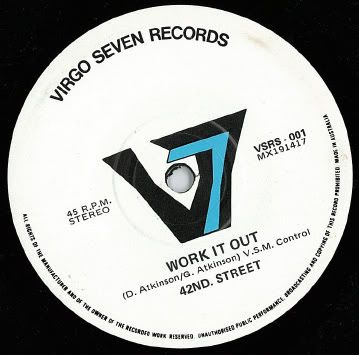
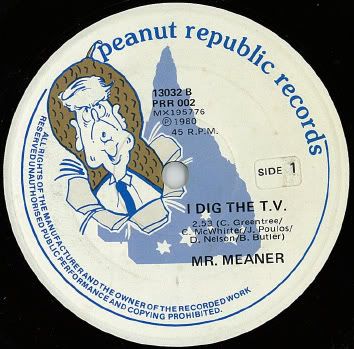
Coombe subsequently played with the likes of 42nd Street and Mr Meaner. Though both have their appeal, we respectfully disagree about their relative merits vis a vis Bad Habit (nothing personal - as a general rule, musicians are the last people we trust to appraise their own work).

Scum stats: either 250 or 300 copies (depending on who you ask) pressed through EMI Custom, but it's more elusive than contemporaneous records pressed in one third of that quantity. Where did all of those records go?

Burning Yearning


Don't Touch


Leave It Up To Rock & Roll